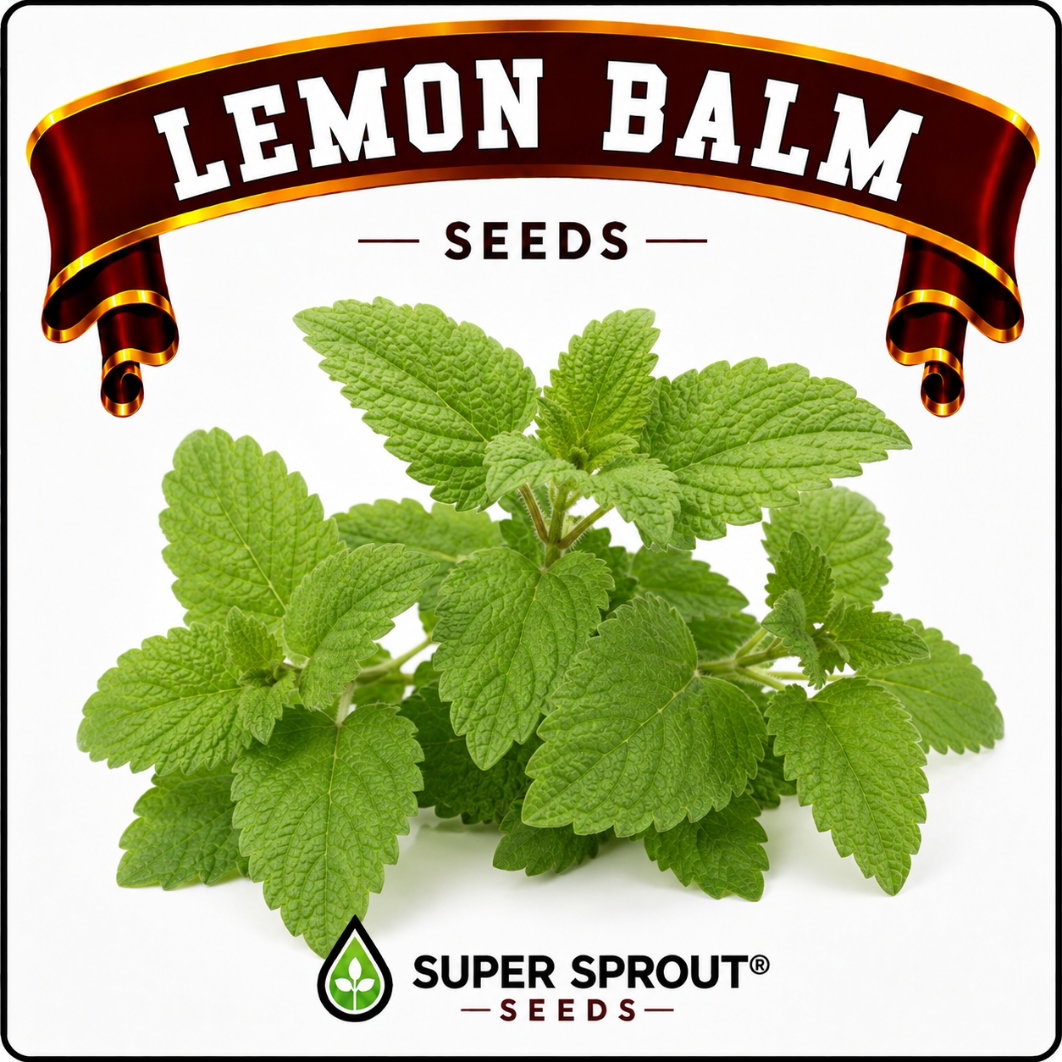
🍋🌿 Lemon Balm Seeds
Melissa officinalis
Fill your garden with the fresh, uplifting fragrance of Lemon Balm — an easy-to-grow perennial herb with lush green leaves and a wonderfully sweet, lemony aroma and flavour.
Lemon balm (Melissa officinalis) is a vigorous, bushy herbaceous perennial. Its soft, crinkled leaves release a distinctive citrus fragrance when touched or crushed, while its small summer flowers are rich in nectar and attractive to bees and other pollinators.
Perfect for herb gardens, vegetable gardens, raised beds and containers, lemon balm is a rewarding plant to grow from seed and can provide fresh leaves over a long harvesting season.
🍵 Uses in the Kitchen
Fresh lemon balm leaves have a delicate lemon flavour and can be used in:
- Herbal teas and infusions
- Fruit salads and desserts
- Fresh salads
- Chicken and fish dishes
- Cold drinks and flavoured water
- Garnishes and homemade herb blends
The young leaves and shoot tips generally provide the freshest flavour and fragrance. The RHS recommends harvesting the youngest leaves and using them as fresh as possible.
🌱 Growing Instructions
Sowing
Lemon balm is easy to grow from seed.
Sow into trays, small pots or directly into prepared garden soil. The seeds should be covered with only a very thin layer of fine compost or soil, as some light assists germination.
Keep the growing medium slightly moist while the seeds germinate.
🌱 Germination
Place indoor sowings in a warm, bright position. Germination can take up to approximately three weeks. Once seedlings emerge, remove any propagator cover and continue growing them in good light while keeping the compost slightly moist.
When seedlings are large enough to handle, transplant them carefully into individual pots or their permanent growing position.
☀️ Position
Lemon balm grows well in full sun or partial shade.
In particularly hot South African conditions, some protection from intense afternoon sun can be beneficial, especially for young plants.
🌿 Soil
Plant in fertile garden soil with good drainage. Lemon balm tolerates a wide range of soil types but should not be planted where the roots remain waterlogged.
💧 Watering
Keep young plants consistently moist while they establish, without saturating the soil.
Container-grown lemon balm needs more regular watering because pots dry out faster. Established plants growing in the ground generally require less attention.
✂️ Harvesting
Harvest leaves whenever required once plants are growing strongly.
Regularly picking the young growing tips encourages fresh growth. After flowering, plants can be cut back to encourage a new flush of tender leaves.
🐝 Pollinator Friendly
Allow some plants to flower and you'll be rewarded with small summer blooms that are rich in nectar and highly attractive to bees.
If you don't want lemon balm spreading around the garden, remove flower stems before they set seed. Lemon balm can self-seed readily when conditions suit it.
🪴 Excellent for Containers
Lemon balm can be vigorous once established. Growing it in a large container is an excellent way to keep the plant conveniently close to the kitchen while controlling its tendency to spread.
🇿🇦 Lemon Balm for South African Gardens
With its adaptability to sun or partial shade, perennial growth habit and suitability for containers, lemon balm is a versatile addition to many South African gardens.
Grow it close to the kitchen, alongside your other herbs, or in a pot where you can simply reach over and pick a handful of beautifully fragrant leaves whenever you need them.
Fresh. Fragrant. Pollinator-friendly — and a wonderful herb to grow from seed.
🌱 PLANT TODAY. GROW SOMETHING EXTRAORDINARY.