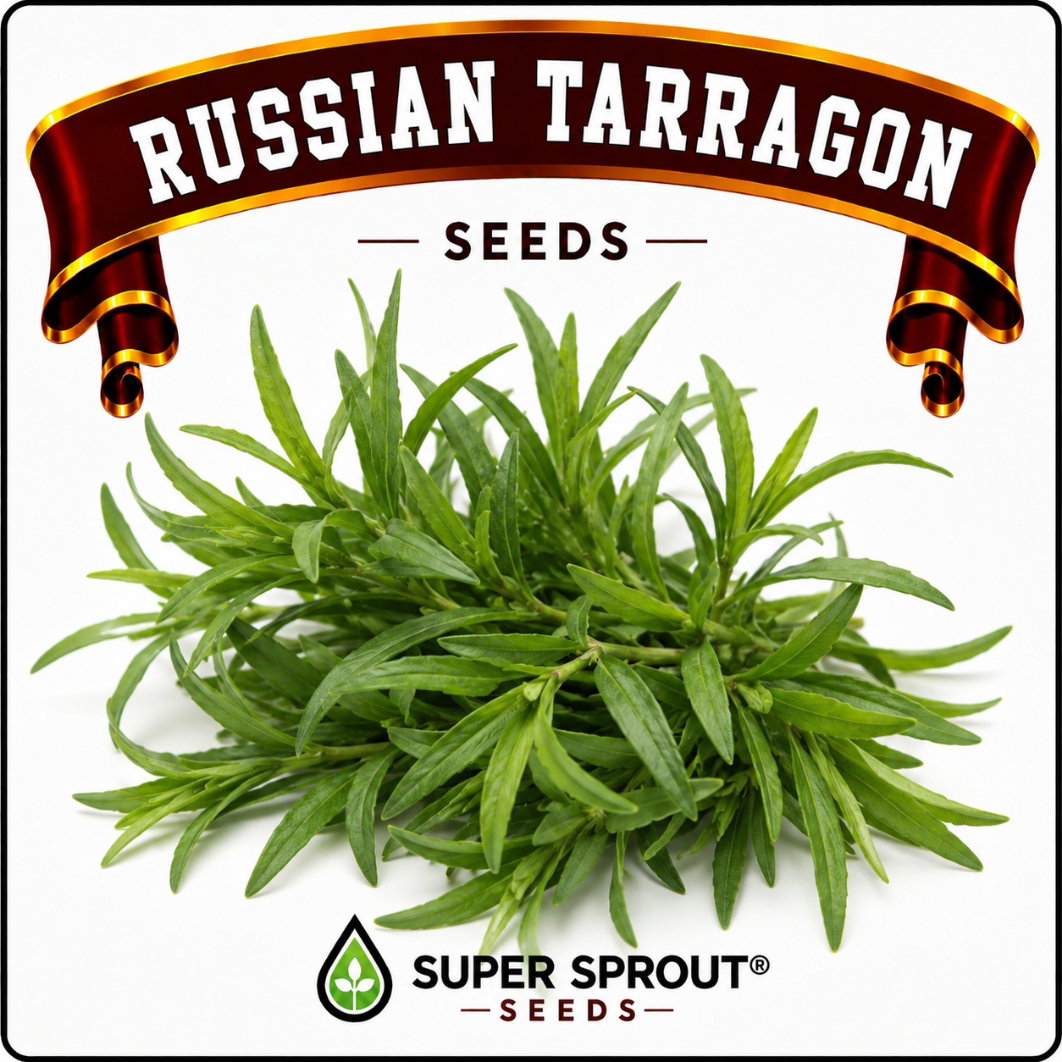
🌿 Russian Tarragon Seeds
Artemisia dracunculus — Russian Tarragon
Add a wonderfully aromatic and hardy perennial herb to your garden with Russian Tarragon.
Russian tarragon (Artemisia dracunculus) produces slender green leaves with a distinctive aromatic character. It belongs to the same species as French tarragon, although Russian tarragon is generally more vigorous and less intensely flavoured than the classic French culinary form.
One of its biggest advantages for seed growers is that Russian tarragon can be grown from seed, whereas French tarragon is normally propagated vegetatively because it rarely produces viable seed.
Once established, the plants develop into attractive, upright clumps of narrow foliage and can return year after year. Tarragon prefers a sunny position and well-drained soil, making it a useful addition to herb gardens, vegetable gardens and larger containers.
🍴 In the Kitchen
The young leaves can be harvested and used fresh in a variety of dishes. Their herbal flavour works particularly well with chicken, fish, eggs, vegetables, potatoes, sauces, marinades and herb vinegars.
Because Russian tarragon tends to have a milder flavour than French tarragon, the young tender growth is particularly useful for culinary harvesting.
🌱 Growing Russian Tarragon from Seed
Sow the small seeds into trays or pots containing a fine, moist seed-starting medium. Surface sow or cover only very lightly, as the seeds are small.
Keep the growing medium consistently moist during germination without allowing it to become waterlogged. Once seedlings are large enough to handle comfortably, transplant them into individual pots before planting them into their permanent position.
☀️ Position
Plant Russian tarragon in full sun for strong, healthy growth.
Choose an open position with good air circulation. Plants can become sizeable once established, so allow them enough room to develop naturally.
🌿 Soil
Russian tarragon performs best in well-drained soil. Tarragon generally dislikes persistently wet ground, particularly during cooler weather.
If your garden has heavy soil, incorporating organic matter and improving drainage—or growing the plants in raised beds or containers—can help.
💧 Watering
Water seedlings and newly transplanted plants regularly while their root systems establish.
Once established, avoid keeping the soil continuously saturated. Allowing the upper soil to begin drying between watering is preferable to permanently wet conditions.
✂️ Harvesting
Begin harvesting once plants have developed enough healthy foliage to continue growing strongly after cutting.
Pick young shoots and tender leaves as required. Regular light harvesting can also encourage fresh, bushy growth.
For the best culinary quality, harvest healthy young foliage and use it fresh, or preserve excess leaves for later use.
🌱 Perennial Herb
Russian tarragon is a herbaceous perennial, so established plants can regrow for successive seasons rather than needing to be resown every year.
In suitable conditions, mature plants form substantial clumps and may benefit from cutting back old growth as the plant moves through its seasonal growth cycle.
🇿🇦 A Great Herb for South African Gardens
Russian tarragon's preference for sun and free-draining soil makes it a useful choice for many South African herb gardens. In particularly hot, dry areas, pay closer attention to watering while young plants establish, while gardeners in winter-rainfall regions should take special care to provide excellent drainage.
Grow it in the herb garden, vegetable garden, raised beds or large containers and enjoy fresh aromatic leaves straight from your own garden.
🌿 Plant today. Grow something extraordinary.