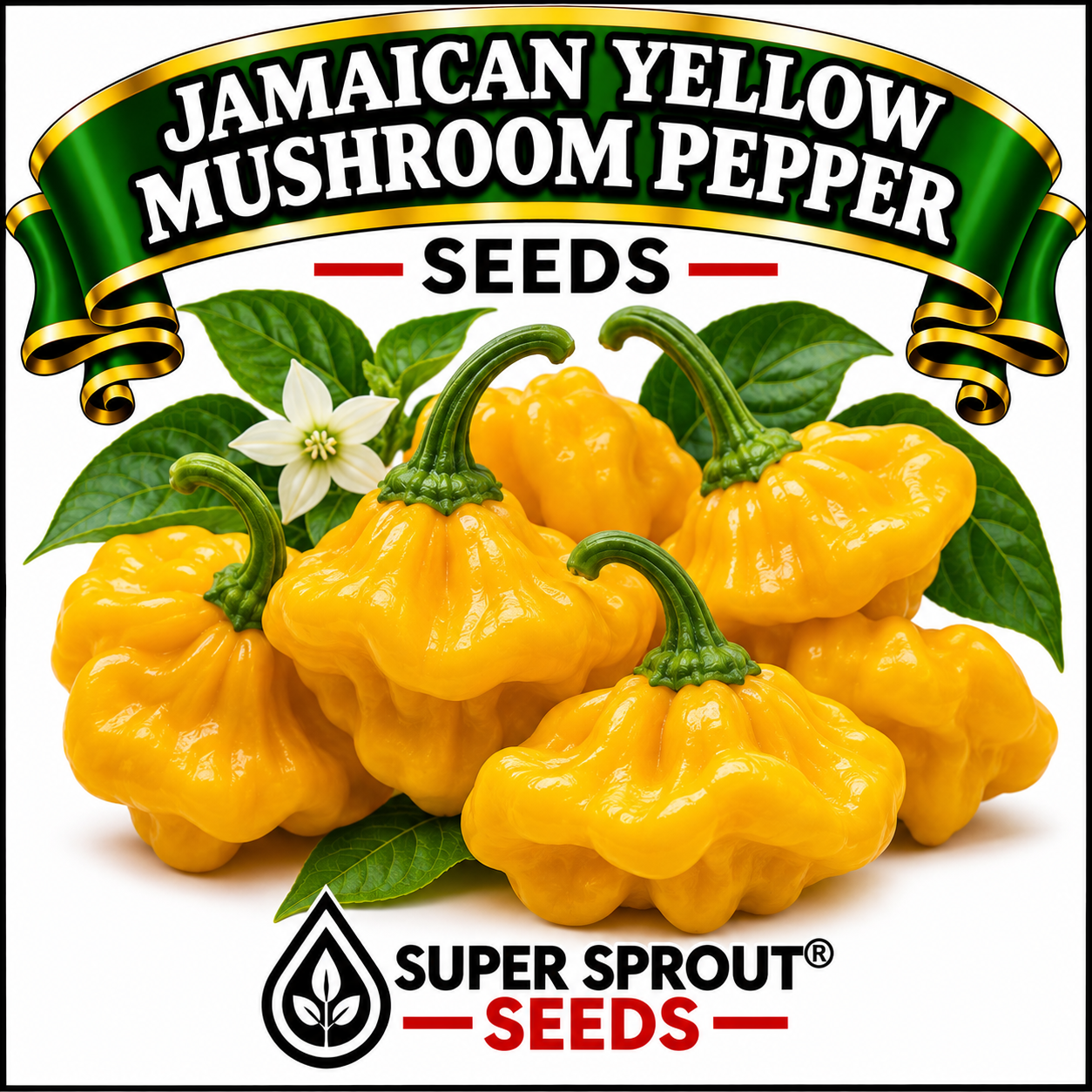
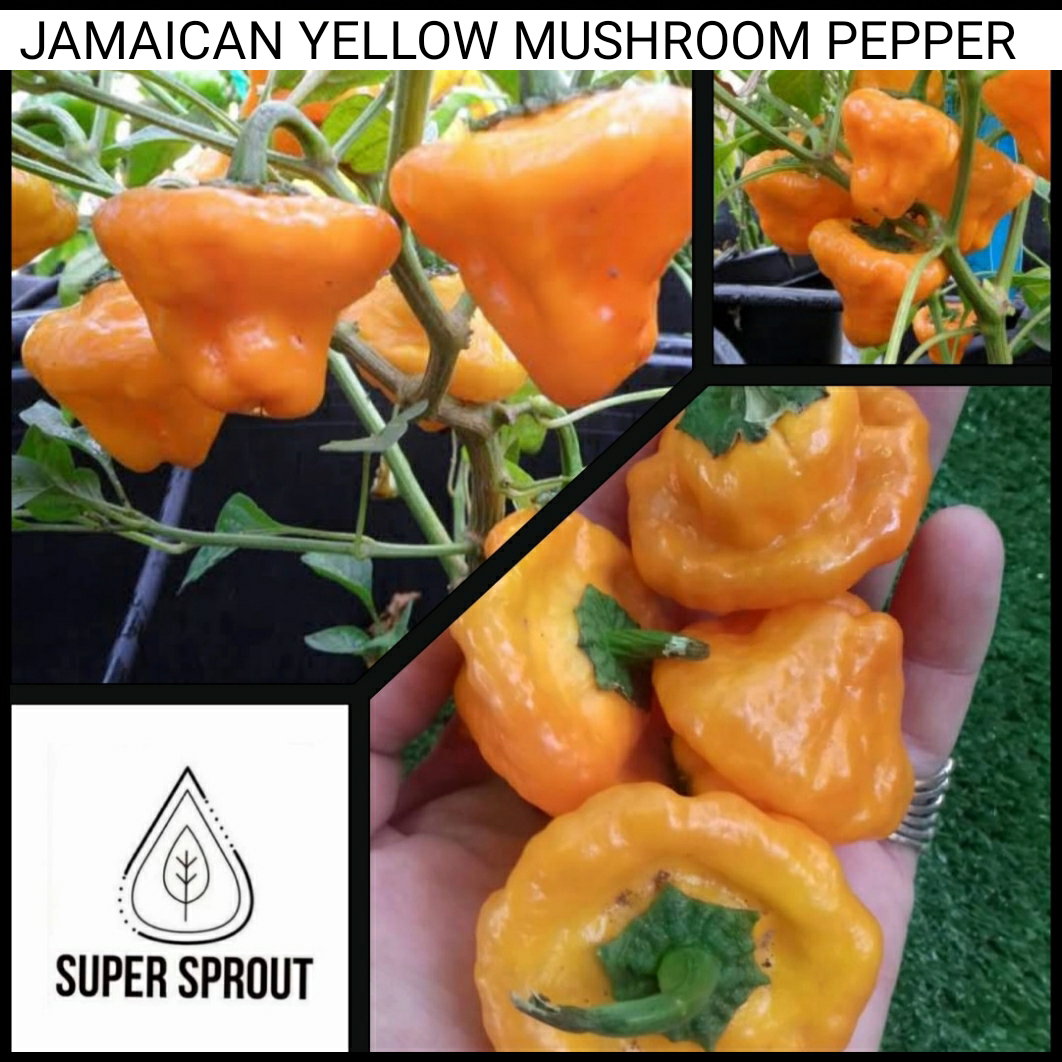
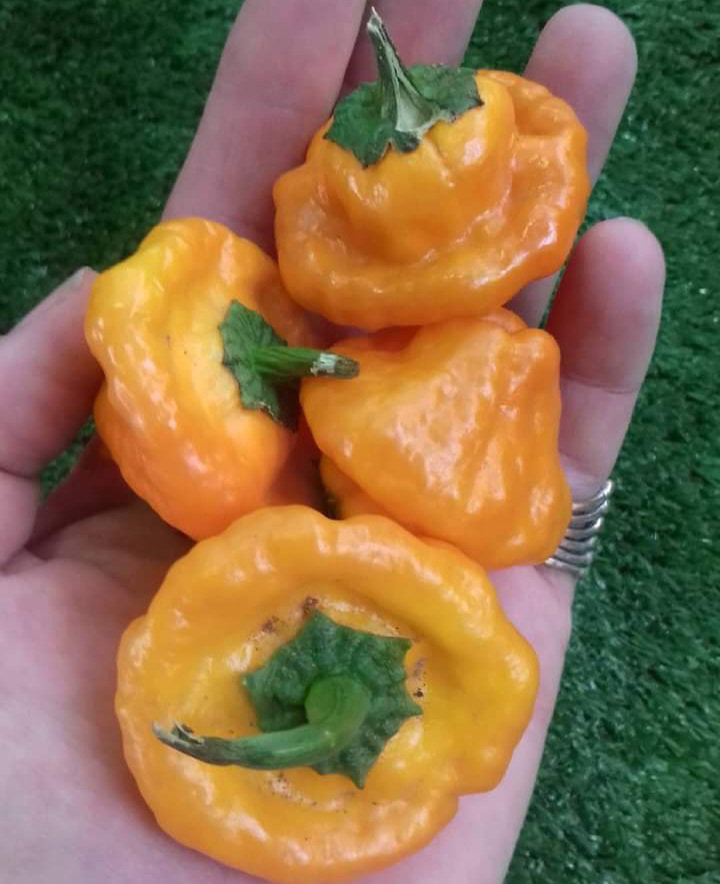
Jamaican Yellow Mushroom chile peppers are predominately used in the Caribbean, especially in Jamaica, to make hot sauce and jerk seasoning. Jamaican cooking has evolved from a blend of indigenous, European, and African cuisines and is heavily focused on spices and flavoring. Jerk cooking is a method created in Jamaica that flavors meats with mixes of peppers, herbs, and spices such as allspice, cinnamon, nutmeg, and black pepper. Meats such as fish, pork, and poultry are traditionally rubbed in these mixtures and are smoked over fires to develop a sweet, spicy, and smoky flavor. Though habaneros and scotch bonnet peppers are the main varieties of peppers used in these spice mixes, Jamaican Yellow Mushroom chile peppers are used when available and are a substitute for a fruity variation.
Geography/History
Jamaican Yellow Mushroom chile peppers are descendants of peppers that were transported from Central and South America into the Caribbean via migrating indigenous peoples during ancient times. The peppers were then spread to Europe and Asia via Spanish and Portuguese explorers through trade, and they were also brought to the United States through immigration. Today Jamaican Yellow Mushroom chile peppers are not commercially grown and are mainly cultivated through home gardens and specialty farms in the Caribbean, United States, and Europe.
How To Grow Your Chilli Plants
Chillies are always grown straight from seed, which should be sown in trays or small pots in spring once the last frost is over. Sow your chilli seeds from August to November in most parts of SA – in areas where there could be late frost, it’s safer to wait for September. Use a light, well-drained seedling mixture, sow your seeds about 5 mm deep, water well and place on a warm windowsill or in a greenhouse to germinate. These hot numbers originate from warm countries, so require a minimum temperature of 18–25°C to germinate. They generally pop their heads up after seven to 14 days, but some of the extreme varieties such as the ghost chillies can take up to 30 days to germinate. The hotter the chilli, the longer the seed takes to sprout.
Transplant your seedlings when they have two sets of true leaves, meaning the leaves that appear after the first set. Chillies can be planted out into the open ground in a sunny area, into containers, veggie planters or even hanging baskets. Make sure that your soil is loose, well- draining and rich in organic matter. An addition of a teaspoon of 2:3:2 fertiliser to each planting hole will ensure that your young plants get the best start and will flower prolifically. Chillies enjoy humidity, so spray your plants with a fine water spray during dry weather – this will also help stop flower drop.
TOP TIP: Sprinkle a teaspoon of Epsom salts (magnesium sulphate) around the plants’ roots at this stage – also very beneficial for flower production. Warning: Chillies are not happy in a windy position and tend to drop their flowers if they are not sheltered from high winds.