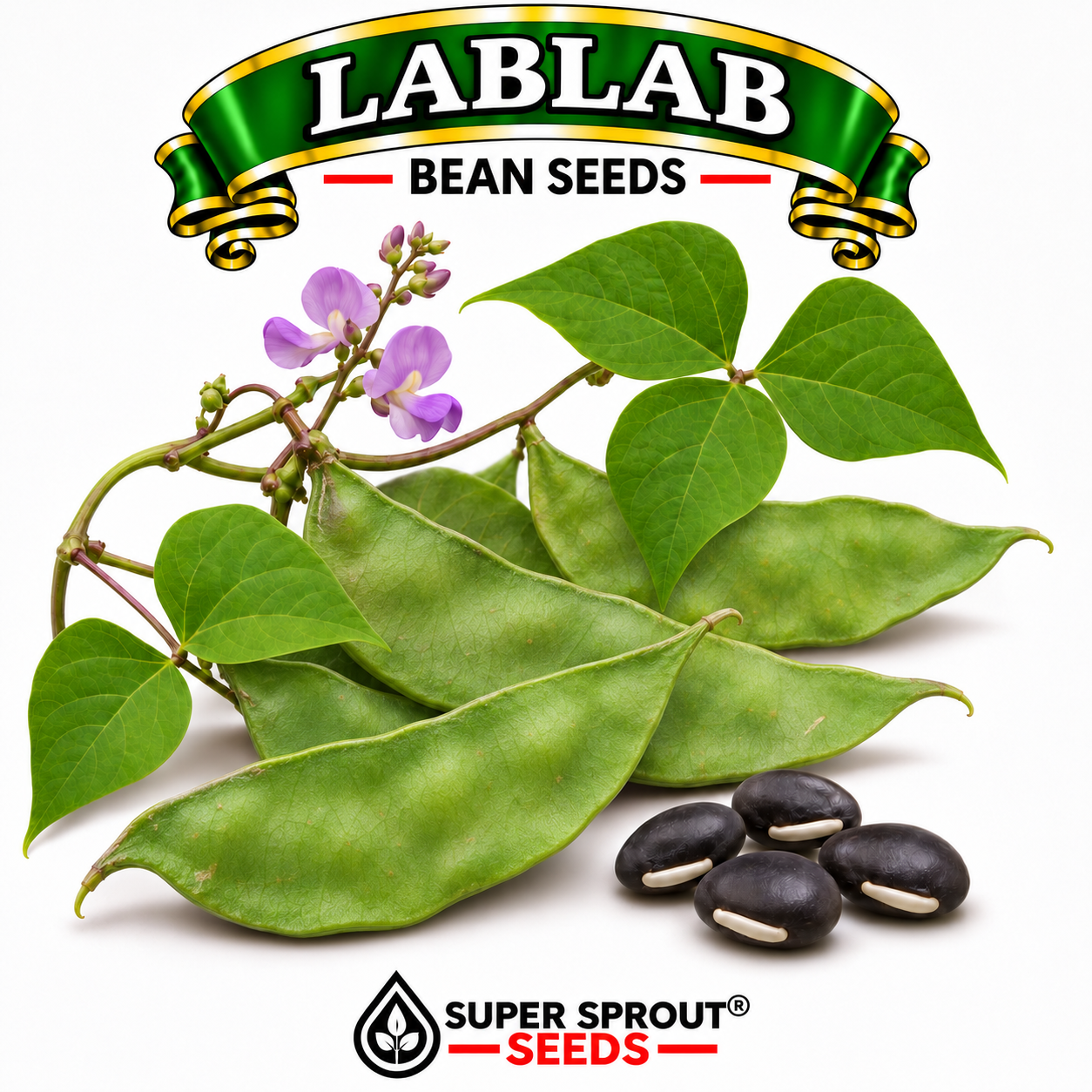
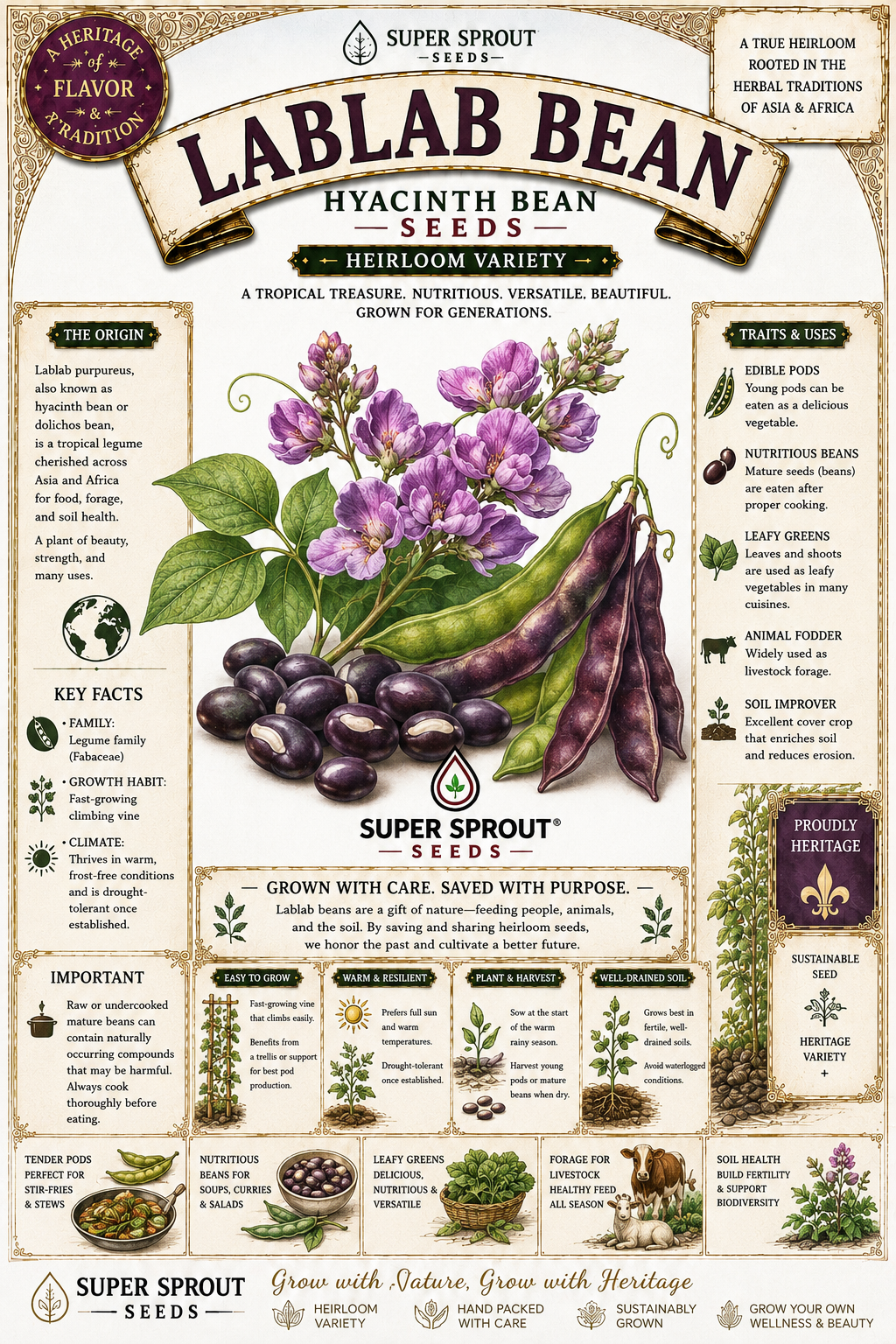
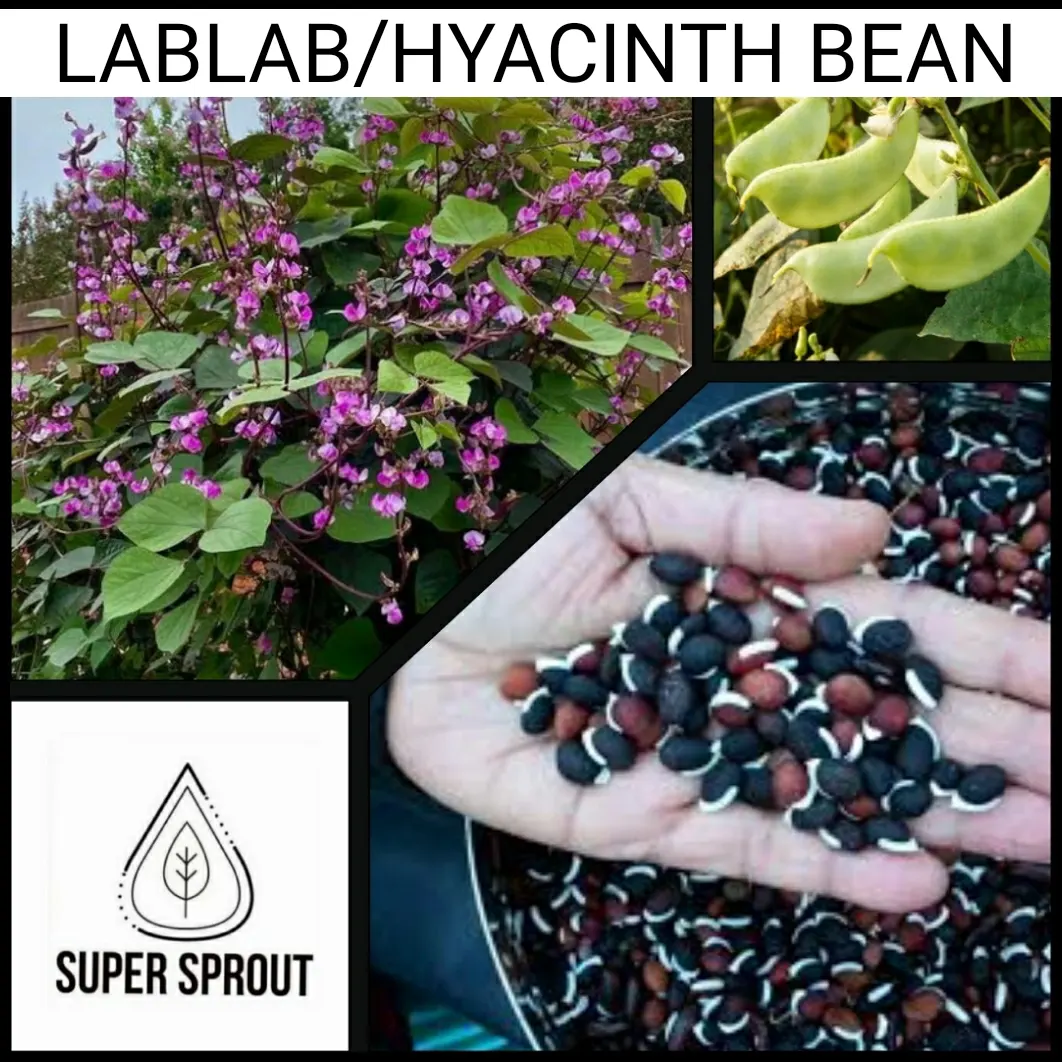
Lablab beans (Lablab purpureus), also called hyacinth beans, are a warm-season crop grown for food, ornamental flowers and soil improvement.
Origin and history
Research points to eastern and southern Africa as lablab’s origin, followed by its spread across Africa and Asia. It is an ancient cultivated crop: Kew reports cultivation in India as early as 2500 BCE. It remains part of traditional African and Asian cooking, including bean dishes and curries.
Benefits
- Food value: Properly prepared beans provide plant protein, while fresh pods contribute fibre and minerals.
- Heat and drought tolerance: Established plants cope with dry conditions, although watering remains important for pod production.
- Soil improvement: Lablab can fix nitrogen through its association with suitable root bacteria and is useful as a green-manure crop.
- Decorative value: Its climbing growth, flowers and pods make it attractive on a sturdy garden trellis.
Growing instructions for South African gardens
Step Instructions
When to sow Sow during warm spring or early summer, after frost danger has passed and soil temperatures are consistently around 18°C or warmer. Follow local conditions rather than a fixed date.
Position Choose full sun and well-drained soil. Work compost into the planting area.
Sowing depth Sow 2–5 cm deep into moist soil.
Spacing Allow approximately 30–45 cm between planting stations and 60–100 cm between rows.
Support Provide a strong trellis or fence for climbing types.
Watering Keep soil moist during establishment. Water during dry spells, particularly while flowering and forming pods; avoid waterlogging.
These recommendations draw on agricultural planting guidance and horticultural growing advice.
Harvesting: Pick vegetable pods while young and tender. For dry beans or seed saving, leave selected pods to mature and dry on the plant, then shell and dry the seeds fully. Flowering and harvest timing depend on the variety and day length; some types flower much later than others.
Food preparation: Never eat lablab pods or beans raw. Cook young pods thoroughly. Mature dried beans require thorough boiling with several changes of water because they contain naturally occurring toxins. Green pod colour does not mean they are safe to eat raw.